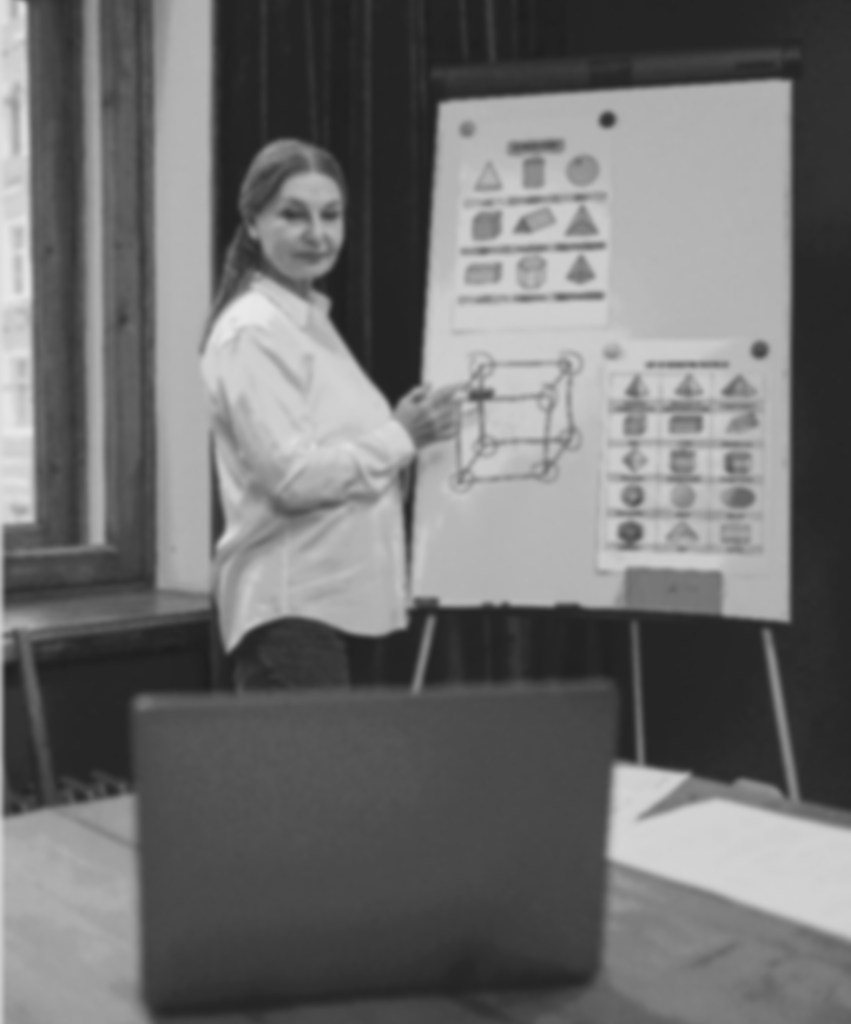
We learn geometry in school for several reasons, both practical and theoretical:
- Foundation for Spatial Thinking
- Geometry helps us understand shapes, sizes, positions, and movements in space.
- This spatial awareness is essential for fields like engineering, architecture, and even everyday tasks like packing a suitcase efficiently.
- Problem-Solving and Logical Reasoning
- Geometry requires structured thinking and logical deduction, which are valuable skills in many areas, including mathematics, science, and technology.
- Proof-based geometry teaches us how to build arguments and justify conclusions—key skills in both academic and real-world settings.
- Connection to Real-World Applications
- Geometry is used in designing buildings, creating graphics in video games, planning roads, and even in sports strategy.
- Professions like carpentry, art, and robotics heavily rely on geometric concepts.
- Foundation for Advanced Mathematics
- Many higher-level math topics (trigonometry, calculus, linear algebra, topology) build on geometric ideas.
- Understanding geometry makes it easier to grasp concepts in physics, engineering, and computer science.
- Visual Representation of Abstract Concepts
- Geometry helps translate abstract math into something visual, making it easier to understand.
- This visualization is crucial in data science, machine learning, and AI, where geometric intuition often plays a role (e.g., high-dimensional spaces in neural networks).
What careers later in life would depend on my knowledge of geometry?
If you have a strong background in geometry, there are many career paths where that knowledge is essential. Given your interest in AI and math, some of these might be particularly relevant to you:
Math & AI-Related Careers
- Machine Learning & AI Researcher – Many AI algorithms (e.g., neural networks, computer vision) rely on geometric concepts like vector spaces, transformations, and manifolds.
- Data Scientist – Geometry helps in understanding high-dimensional data, clustering, and visualization techniques like t-SNE or PCA.
- Robotics Engineer – Robots need geometric algorithms for motion planning, object recognition, and spatial reasoning.
- Computer Vision Engineer – Uses geometry for object detection, facial recognition, 3D modeling, and augmented reality applications.
- Cryptographer – Some cryptographic methods rely on geometry, especially in lattice-based cryptography.
Engineering & Design
- Mechanical Engineer – Works with shapes, structures, and physical forces, often requiring CAD (Computer-Aided Design) software.
- Civil Engineer & Architect – Geometry is used in designing buildings, bridges, and infrastructure.
- Aerospace Engineer – Uses geometry in aerodynamics, spacecraft design, and navigation.
- Game Developer – Geometry is crucial for 3D modeling, rendering, and physics engines in video games.
Science & Research
- Physicist – Many physics concepts (like relativity, optics, and quantum mechanics) have strong geometric foundations.
- Astronomer – Uses geometry for celestial navigation, telescope imaging, and understanding planetary motion.
- Biologist (Structural Biology) – Studies molecular shapes and protein folding using geometric principles.
Finance & Economics
- Quantitative Analyst – Uses geometric concepts in financial modeling and optimization problems.
- Operations Research Analyst – Applies geometry in logistics, supply chain optimization, and network design.
 One-Zero